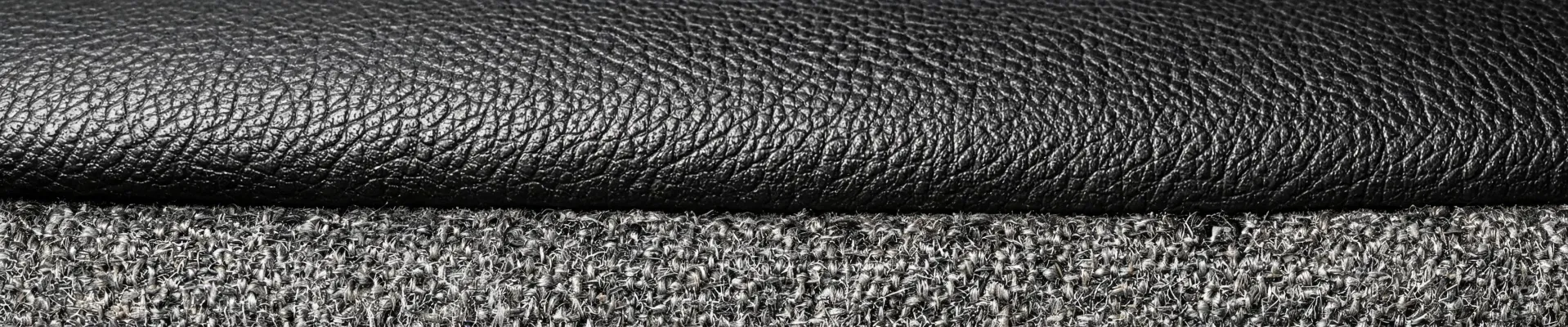
The phone rang at 9:15 on a Tuesday morning in March 2022. It was our production manager, and he skipped the greeting.
"That roll you ordered for the Parsons chairs? Color's off. Not a little. The client's going to notice."
I didn't need the details. I'd been watching red flags pile up for six weeks—I just hadn't wanted to admit what they meant.
How I got there
Quick background on where I sit: I'm the purchasing administrator for a contract furniture manufacturer with around 120 employees. I handle all upholstery material ordering—roughly $1.2 million annually, spread across 8–10 vendors for foam, frames, hardware, and fabric. I report to both operations and finance, which means my job sits right between "keep quality up" and "cut costs."
When I took over purchasing in 2020, the owner gave me a clear mandate: find savings in the material line. I negotiated hard, consolidated vendors, switched carriers. Then I turned to fabric—specifically the synthetic leather we used for our mid-range contract seating line.
That's when a supplier cold-called with a tempting offer: bulk PU leather at 30% below what we were currently paying. On paper, it was a no-brainer. The sample swatch felt fine, the MOQ worked with our production schedule, and the sales rep was responsive. That last part should've tipped me off, honestly. (Note to self: when a rep is overly eager, ask yourself what they're compensating for.)
I ordered 3,000 yards for our flagship chair line and felt pretty good about myself.
What I missed
The thing is, I was evaluating a long-term material decision based on a single swatch and a price sheet. That's not a process. That's a gamble.
Here's what I should have asked before placing that order:
- What's the batch-to-batch color tolerance?
- What's the abrasion rating? Actual test results, not just claims?
- What does the backing look like when you fold and split it?
- Can you guarantee the same formula across production runs?
I asked none of them. I was too busy calculating savings per yard.
Color, the first crack
The first delivery looked fine. The second delivery—three weeks later—was visibly different. I held a swatch from batch one next to a swatch from batch two, and honestly, it looked like two different colors. That's when I learned about Delta E, the industry standard for measuring color difference.
Brand-critical colors should stay under Delta E 2; that's the tolerance most serious suppliers work to (reference: Pantone Color Matching System guidelines). Delta E of 2–4 is noticeable to trained observers, and above 4, most people can see it. We were sitting somewhere around 4–5. For a company that installs 50 to 200 chairs in a single commercial space, that's a dealbreaker. Two chairs side by side, slightly different. Our clients absolutely noticed.
I spent three weeks, a handful of tense emails, and two rushed re-orders getting matching material. The "savings" were already eroding.
The real disaster
Six weeks in, a retailer called about a sofa we'd produced with the same material. The surface was peeling where the arm met the seat—delamination along the seam. Twelve units and counting.
I still kick myself for not running an abrasion test upfront. If I'd spent a couple hundred dollars on Martindale testing and inspected the backing, I would have seen the weakness before it went into production. Instead, two of our best clients were handling failures.
Here's the number that matters: the $12,000 we "saved" on that cheap bulk PU leather turned into roughly $48,000 in rework, expedited freight, replacement material, and labor hours our production team couldn't spend on profitable work. And we nearly lost a $40,000 client over it. As far as regrets go, that one sits near the top of my list (I should pin the calculation to my office wall as a reminder).
The conversation that changed my approach
Around that time, our shop foreman—a guy who's been cutting upholstery for 30 years—said something I initially dismissed. "Look at Ultrafabrics. I worked with their Brisa line on a hospitality project years ago. That stuff held up through some serious abuse."
In my head, "vegan leather" still meant "cheap substitute." That's a legacy belief, and it comes from an era when synthetic leathers were low-tech, plasticky, and quick to fail. But honestly, that thinking is outdated. Today's engineered synthetic leathers—especially what Ultrafabrics makes—are fundamentally different materials. They're built with bio-based and solvent-free processes and engineered for performance, not just positioned as a cheaper alternative to animal leather.
I also see people getting the causation backwards in this industry. People think expensive vendors deliver better quality because they charge more. Actually, it runs the other way: vendors who invest in R&D, testing, and quality control can charge more because they're better. The price is the result of the investment, not the other way around.
Why Ultrafabrics won us over
I signed up for an Ultrafabrics account. One thing that made this easy is that they work with OEM and private-label partners and support wholesale and distribution. So this wasn't a retail purchase—it was a B2B relationship, which is exactly what we needed. Whether you're producing under your own label, doing artificial leather OEM work for clients, or simply buying rolls for production, that level of flexibility matters.
We requested production-scale samples, not just swatches, and tested three lines:
- Ultrafabrics Ultraleather—for our classic smooth upholstery applications. The feel is noticeably less plastic-prone than cheap PU, and it presents well in client meetings.
- Ultrafabrics Brisa—the line my foreman mentioned. It's performance-oriented with strong abrasion results and a soft, slightly textured hand. We use it for contract seating that sees heavy daily use.
- Volar Bio—we started sampling this when a healthcare client asked about bio-based options. It's a great addition to that conversation, as of early 2024 at least, and it shows where the product line is headed.
The key difference from our cheap PU supplier was data. Ultrafabrics provided test results we could verify—abrasion, tear strength, color consistency within the Pantone tolerance we needed. And we actually learned about their supply chain, something the previous supplier never offered.
How I choose synthetic leather for wholesale now
After that experience, I developed a screening process for any synthetic leather supplier. If you're in manufacturing, distribution, or a design firm navigating this, here's what I use:
- Order production-scale samples. Swatches feel fine almost always. A full hide lets your sewing team test how it handles, splits, and accepts seams.
- Ask for test data. Abrasion (Martindale cycles), tear strength, backing stability. If a supplier hesitates, that's a red flag.
- Check color tolerance. Ask what Delta E they guarantee between batches. Good suppliers work toward Delta E less than 2 for brand-critical colors. If the sales rep doesn't know what Delta E is, move on.
- Verify OEM and private label support. If you're building your own product line, you need someone who understands customization, minimums, and labeling—not just a roll seller.
- Run it through your process. Test it on your own upholstery equipment. Cheap material that jams your production or fails at the seam will cost more than any per-yard savings.
These steps sound basic. But the cheap supplier passed every surface-level check. It failed the ones I never ran.
Where we are now
We transitioned our mid-range contract line to Ultrafabrics Ultraleather and Brisa in late 2022. Since then, we've had no material-related returns tied to our synthetic upholstery. I know that's a fairly strong claim for a buyer to make, but when it comes to raw materials, consistency is the entire game.
To be fair, the original cheap supplier wasn't malicious—they just weren't capable of the consistency our clients require. I get why people chase the lowest quote; budgets are real and cost-cutting pressure doesn't disappear. But the math was unambiguous: a $12,000 "saving" became a $48,000 loss, and it nearly cost us two long-term clients. That's a calculation I'll never repeat.
The biggest lesson isn't really about fabric. It's about what "savings" mean in a supply chain. The lowest price per yard isn't the lowest cost of ownership. Every performance issue, color mismatch, and shipping delay carries a price tag. Value over price, every time.

Lucia Bianchi is a woven apparel-fabric analyst covering cotton, linen, wool, rayon, denim, shirting, twill, satin, poplin, and blended garment fabrics. She applies the ISO 1833 series for fibre composition and ISO 105-C06 for laundering colourfastness while checking GSM, yarn count, usable width, shrinkage, skew, shade grade, drape, and surface defects. Her specification guides help designers, sourcing teams, and mills align fibre claims, lab dips, bulk tolerances, care conditions, and garment performance before production approval.