
Furniture
Review hand, grain, seam response, repeated contact, abrasion method and compatible cleaning. A rub count is one input, not a prediction of every edge, stitch or cushion geometry.
Furniture, healthcare, hospitality, transportation and outdoor projects can share a visual preference while requiring different cleaning, exposure and assembly evidence.
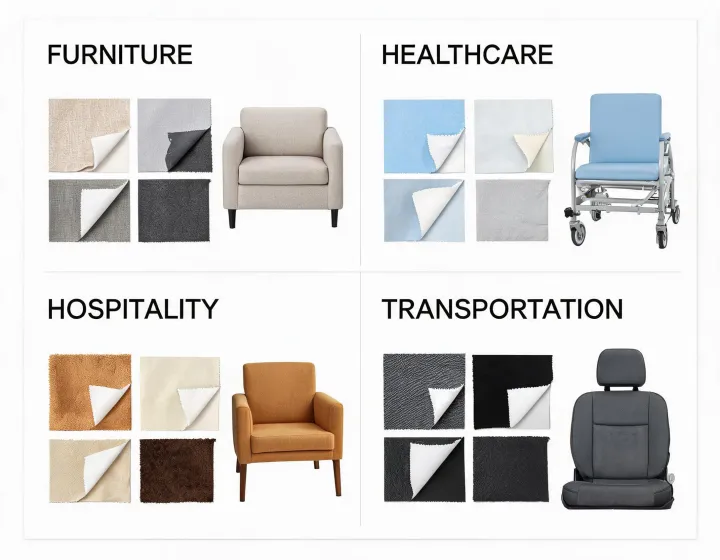
Review hand, grain, seam response, repeated contact, abrasion method and compatible cleaning. A rub count is one input, not a prediction of every edge, stitch or cushion geometry.
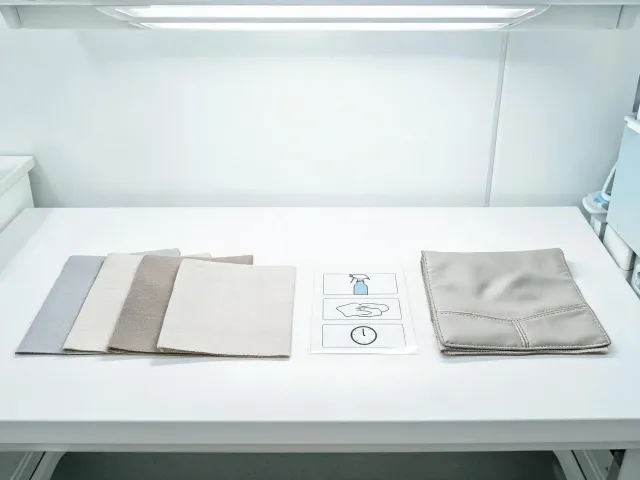
Connect the named collection to the intended cleaner, concentration, contact time and residue-removal practice. Verify the complete seating assembly and applicable chemical documentation.
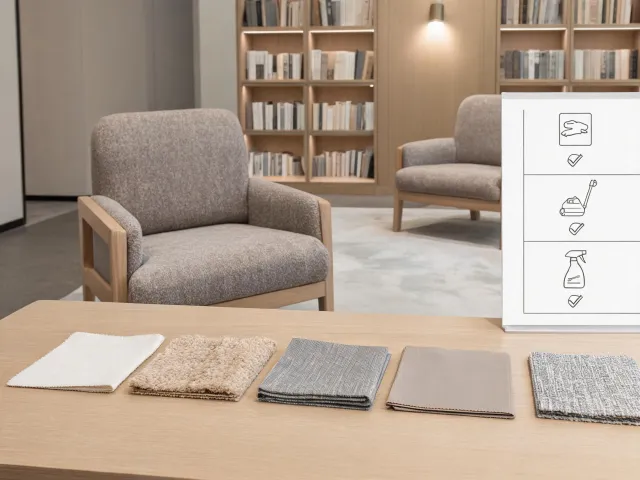
Balance texture and color with high-contact maintenance. Confirm whether the published cleanability and abrasion evidence belongs to the selected collection and colorway.
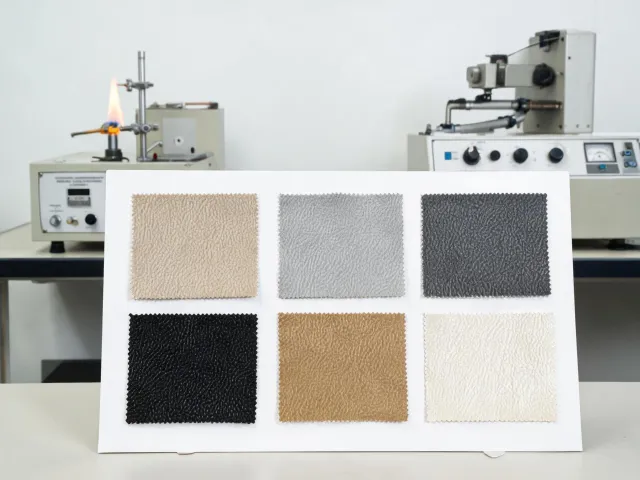
Identify the governing interior requirements and finished assembly. Material-level flammability or abrasion language does not constitute approval of a seat, cabin or vehicle program.
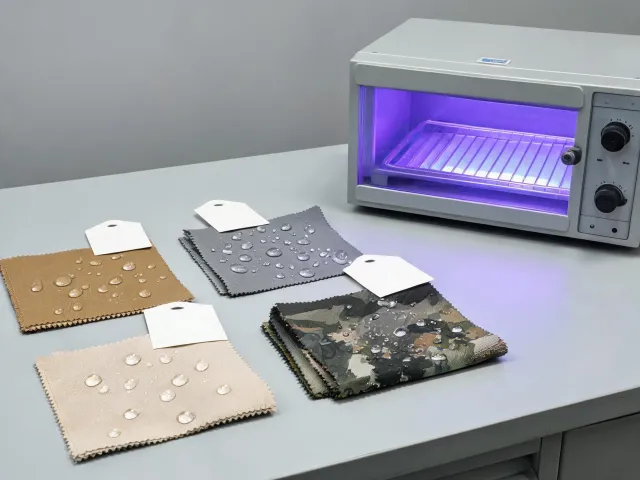
Use only collections documented for the intended exterior context. UV exposure, water repellency, mildew defense and residential or marine limits must be checked independently.
Wyzenbeek reports double rubs under ASTM D4157; Martindale reports rubbing cycles under BS EN ISO 12947-2. The motions, abradants and endpoint interpretation differ. Compare results within the same method and current product document instead of converting one number into the other.
A polyurethane face can deliver surface properties, while seams, adhesives, foam and substrate influence the finished upholstered component. Cleaner residue or incompatible construction can affect parts beyond the face material. Treat surface data and assembly approval as separate decisions.
The same number can have different relevance when cleaning, exposure and assembly conditions change.