I'm the person who tracks every fabric order in our procurement system. I manage about $1.8 million a year in upholstery materials for a 140-person contract furniture company, and I've been doing it since 2019. I don't have hard data on industry-wide defect rates, but based on six years of incoming inspections, my sense is that roughly 10 percent of first-time synthetic suede deliveries have at least one lot-level issue. That's not a number I can quote with confidence. It's just the number I plan for.
The decision that taught me the most wasn't the biggest order. It was a 300-yard order of faux suede in 2023, and it looked like a win at first.
How We Got Here
Before 2023, we had a suede fabric supplier we'd used for years. Their price had crept up to about $7.50 per yard, and their lead times had stretched. Quality was acceptable. Not great, not terrible. Serviceable. When a new supplier sent samples that matched our color almost exactly at $6.15 per yard, I wanted it to work.
Looking back, I should have asked for a production pilot roll. At the time, the sample felt great, the Martindale numbers looked fine, and the price was low enough that I told myself we'd be foolish not to try them. That's exactly why I missed the risk.
The Sample That Looked Perfect
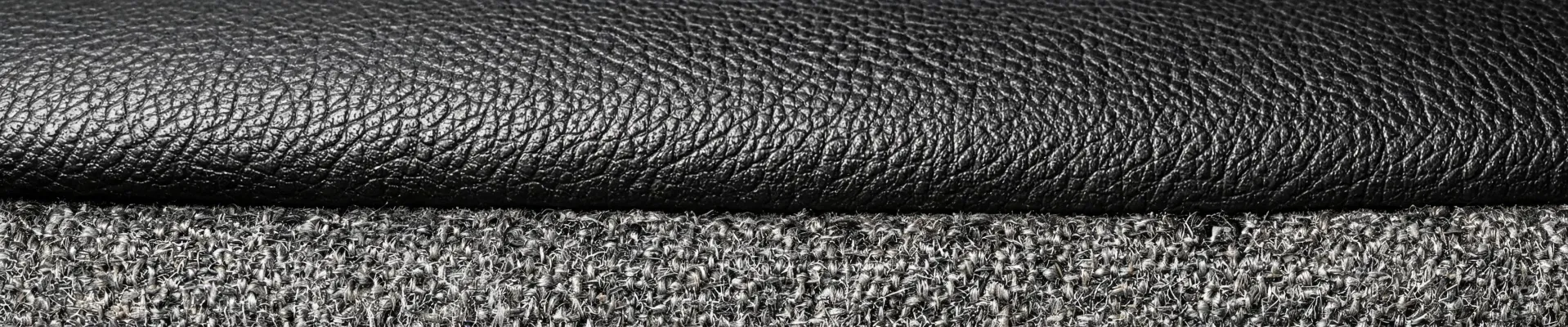
We ordered 300 yards of bulk leather fabric for a hotel lounge project. When I say bulk leather fabric, I mean full rolls of synthetic leather, not cut-yard samples. The supplier confirmed the color, sent a cutting approval, and shipped on time.
The first roll looked good. The second roll was close. By the third roll, the color was slightly lighter. By the seventh, the nap direction was different. The suede looked like two different fabrics depending on which roll it came from. Oh, and I should add that the fire-retardancy paperwork arrived two weeks late, which pushed our production schedule.
We tried to work with it. Not ideal, but workable, I thought. Then our lead cutter rejected four rolls because the surface had a visible sheen change under the work lights. We had to stop and wait for a decision. The supplier offered a credit, but the deadline didn't move.
That's when I did the math and wished I'd done it earlier.
What the Cheaper Supplier Actually Cost Us
We spent $1,845 on the 300-yard order. Then we spent $980 on replacement fabric from our old supplier, $2,300 on overtime for re-cutting and re-sewing, $1,100 on expedited freight, and about $600 in project management time. I still kick myself for not catching the nap direction before we cut the first panel. It was a thirty-second inspection, and the rework cost more than the fabric.
The total came to about $6,825. The 18 percent savings on the first invoice turned into a 267 percent overrun on that portion of the job. The surprise wasn't the price gap. It was how much hidden cost came with the lower quote—no quality guarantee, no inspection report, and no willingness to answer questions after payment.
Why does this matter? Because a sample is not a production run. A sample is a carefully selected piece of fabric. A production run is 300 yards of reality.
What to Look for in a Suede Fabric Supplier
After that, I rebuilt our supplier checklist. What to look for in a suede fabric supplier, in my experience, comes down to four questions.
- Can you guarantee dye lot consistency? Suede shows color and nap drift more than any other surface we use. I ask for the lot tolerance, the color difference measurement they use, and the maximum number of lots allowed in one shipment.
- Will you ship a production pilot roll? Not a hand sample. A roll from the actual batch that will ship, or at least from the same production lot. If they won't do it for a trial order, that tells me something.
- What happens if the shipment doesn't match the sample? I need a written defect policy, short-ship policy, and credit process. A verbal 'we'll make it right' is worth nothing when the seamstresses are standing idle.
- What does total cost look like? Price per yard is not total cost. I now compare freight, duties, minimums, payment terms, lead time, and rework risk. That spreadsheet saved us more than any discount.
I built a cost calculator after that. It's a simple spreadsheet, but it has a line for rework risk. No other spreadsheet I use has ever paid for itself the way that one did. Our procurement policy now requires a pilot run before we put a new fabric supplier on our approved list.
This approach worked for us, but our situation is specific. We're a contract furniture maker with predictable reorder cycles. If you're a custom upholstery shop doing one-off pieces, the calculus might be different. You may not need the same volume commitment or the same documentation.
Why We Switched to Ultrafabrics
After the 2023 disaster, we spent the first quarter of 2024 comparing 8 fabric suppliers using the new cost calculator. In Q2 2024, we restructured our fabric list. For suede finishes, we moved to Ultrafabrics Brisa. For our sturdier bulk leather fabric rolls, we shifted most of the main line to Ultrafabrics Ultraleather. It wasn't the cheapest decision. It was the cheapest total cost, which is different.
The first thing that stood out was consistency. Rolls from different lots looked like the same material. The second thing was documentation. We got the test data we asked for without a week of chasing emails. And when we had a question about a stain-resistance claim, the response was direct. I don't need a supplier to be perfect. I need them to be predictable.
According to the FTC Green Guides (ftc.gov/green-guides; 16 CFR Part 260), environmental claims need substantiation. That's been useful because we also evaluated bio-based synthetic leather options. I appreciate the sustainability story, but I won't pay a premium for 'eco' claims unless the supplier can back them up with test reports. Ultrafabrics was able to do that on the products we qualified.
For OEM and private-label buyers, supply continuity matters even more. A fabric that changes color or hand between lots can ruin a product launch. We need a supplier with a broad portfolio and the documentation to support long-term specs. That's part of why Ultrafabrics works for us.
A Quick Note on Silicone Leather Wholesale
I get emails from folks asking about silicone leather wholesale. We tested some silicone-coated materials for a hospitality project, but several samples failed our flex test. That's not a universal verdict on silicone leather. It just means we had to rule it out for that application. If you're comparing silicone leather wholesale options, use the same checklist: production samples, written defect policies, and total cost. The coating chemistry, base fabric, and backing all matter, and they vary more than the marketing materials suggest.
For now, Ultrafabrics Ultraleather and Ultrafabrics Brisa are our workhorses. Is that an ad? No. We're a customer, not a distributor. I just like the numbers. We've processed maybe 120 orders since 2019. Maybe 115, I'd have to count. But the point is we tracked enough of them to know the difference between a low invoice and a low total cost.
A lesson learned the hard way: five minutes of verification beats five days of correction. I still wish I had skipped the 2023 order and run a proper pilot first. But I also know we wouldn't have this checklist, and we wouldn't have moved to a fabric supplier that makes my audit trail look clean. If you're looking for what to look for in a suede fabric supplier, start there. Total cost. Documented quality. And a supplier who doesn't disappear after the PO is signed.

Lucia Bianchi is a woven apparel-fabric analyst covering cotton, linen, wool, rayon, denim, shirting, twill, satin, poplin, and blended garment fabrics. She applies the ISO 1833 series for fibre composition and ISO 105-C06 for laundering colourfastness while checking GSM, yarn count, usable width, shrinkage, skew, shade grade, drape, and surface defects. Her specification guides help designers, sourcing teams, and mills align fibre claims, lab dips, bulk tolerances, care conditions, and garment performance before production approval.