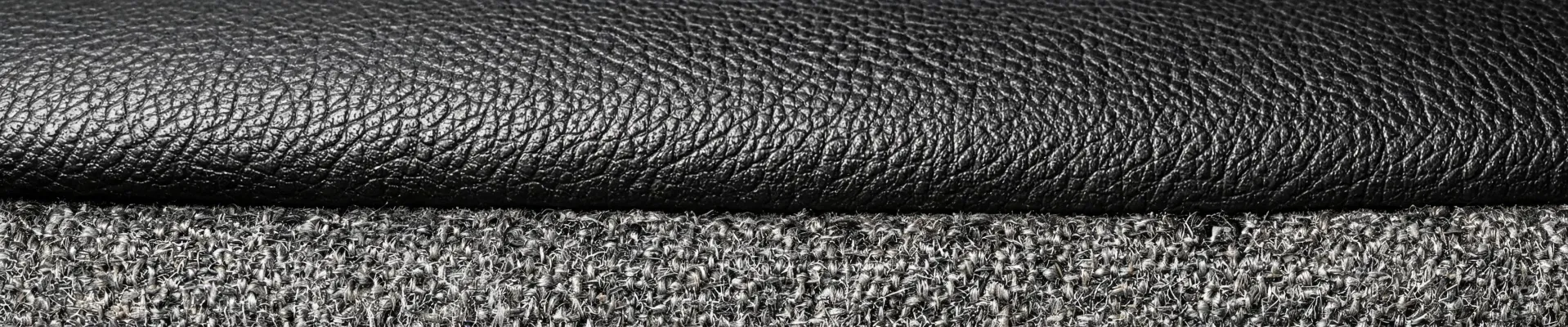
I've spent nine years sourcing upholstery and transport seating materials. In that time, I've personally made five significant purchasing mistakes—totaling roughly $18,600 in wasted budget. That number doesn't include the quieter costs: missed deadlines, lost trust, and a factory re-run I had to beg for. Take it from someone who's made the mistakes: this article is built on them.
None of those mistakes were about material that failed testing. All five were about buying the right material from the wrong kind of supplier for the wrong kind of project. If you're searching for a silicone leather manufacturer or evaluating an automotive leather distributor right now, that distinction matters more than comparing prices.
Here's what I learned the hard way: no supplier type is universally best. A distributor that serves a repair shop well will frustrate a high-volume OEM, and a manufacturer built for OEMs will ignore a one-off buyer. You need to shop according to your scenario. Based on my experience, most buyers fall into one of three:
- High-volume OEM or contract manufacturer—running large quantities of a limited SKU set (automotive seating, boat interiors, healthcare seating).
- Mid-size furniture or interior brand—many SKUs, smaller volumes, often private label, often "mix and match" catalogs.
- Aftermarket specialist—custom van conversions, boat restorations, seat re-trims, repair work.
Each scenario needs a different supplier strategy. Let me walk you through them, including the mistakes that taught me.
Scenario A: High-Volume OEM and Contract Manufacturing
If you're in this group, work with the manufacturer directly. Not because distributors are bad, but because you need the things only a factory controls: custom colors, custom embossing, backing material choices, and traceable production documentation. Automotive clients ask about VOC, fogging, and UV stability tests. A distributor can hand you a datasheet; a manufacturer can tell you which batch and which production line each roll came from.
Here's the counter-intuitive part: don't choose your manufacturer primarily by unit price. People think expensive material means better quality. Actually, it's the reverse—manufacturers who deliver consistent quality are the ones who get to charge more. The causation runs from reliability to price, not price to reliability. What you want is a factory that meets your spec with a low defect rate, because in automotive, every defect carries the hidden cost of rework, freight, and line stoppage. That's not an argument for the most expensive option. It's an argument for evaluating failure cost before you evaluate material cost.
One more thing: if you're marketing your finished product as "bio-based" or "solvent-free," verify your claims against the manufacturer's documentation. Per FTC guidelines (ftc.gov, 16 CFR Part 260), environmental claims need to be substantiated. I've seen two brands pull labels after copying a supplier's slogan without checking the fine print. Both were embarrassing. One was expensive. I've spec'd Ultraleather for contract furniture, Brisa for transport seating, and Tottori when the design called for technical suede—and in every case, the documentation mattered as much as the hand feel. Even with bio-based lines like Volar Bio, I'd verify the exact percentage and claim wording before putting it on a label.
Scenario B: Mid-Size Brands and Private Label
This is where I made most of my mistakes, honestly. In this segment, everyone tells you to go through a distributor. Local inventory, low MOQs, flexible ordering. Some distributors are excellent—but the advice carries a hidden assumption: that manufacturers won't work with you at your volume.
That's a legacy idea from the era when factories only sold by the container load, and minimum orders were measured in thousands of yards. It's changed substantially. Many manufacturers now run OEM/private-label programs specifically for mid-size brands. In 2024, I contacted Ultrafabrics about private-label support for a client. The conversation was practical: what's your MOQ, what's your lead time, which of your colors map to our production line? No one laughed us out of the room. The rule "you must use a distributor" is a habit, not a law.
That said, going direct isn't automatically better. If your orders are forecastable and you can live with longer lead times, direct purchasing gives you deeper technical access and better pricing. If your customers order piecemeal and you need inventory now, a distributor with regional stock is worth the markup. Compare total cost, not unit cost. A distributor quoting 8% higher but stocking your top 10 colors in a local warehouse often wins on total cost once you include carrying cost and rush freight.
Scenario C: Aftermarket, Restoration, and Custom Work
If you're doing vehicle conversions, interior re-trims, or custom boat upholstery, you're buying in small quantities, but your demands are different. You need consistency: same color across rolls, same grain, same backing. You don't have the leverage to reject a bad lot and wait for a replacement—your customer's vehicle is sitting on your floor.
I learned this in September 2022. I ordered 140 meters of "automotive-grade silicone leather" from a distributor I'd never used. The sales sample was perfect: color, grain, hand feel. I approved the order without requesting production-batch samples.
The rolls arrived visibly lighter than the sample. Every single roll. The fabric cutter caught it when he unrolled the second panel—the first one was already cut into seat covers by then. That order cost $3,800 in material, plus a week of delay and a very disappointed customer. The distributor's response: "the pictures looked fine."
That's when I learned that aftermarket leather buying is about batch consistency, not impressive samples. Now my rule is: request samples from the actual production batch before shipping. And ask the supplier, in writing, how they handle batch-to-batch color variation. If they don't have a documented process, walk away.
Also, know the material. Silicone leather isn't just "premium PVC." It behaves differently under heat, UV, and adhesive bonding. A good supplier—manufacturer or distributor—should talk about adhesive compatibility, stitch elongation, and cleaning instructions, not just quote a price. If they can't, that's a red flag.
Which Scenario Are You In?
Use this quick self-assessment:
- How many SKUs do you actively carry? More than 40, with small per-color volumes, points to Scenario B. Fewer than 10 with steady volumes edges you toward Scenario A.
- What's your typical order size per SKU? If you clear the manufacturer's direct-sale MOQ, direct purchasing is worth a conversation. If not, a distributor's low-MOQ flexibility has real value. MOQ thresholds vary wildly—I'd have to check current numbers, so the honest answer is just to ask.
- Who's the end customer? If you're supplying OEMs or tier-one suppliers, you need traceability and production documentation. If your customer is a conversion shop or a yacht interior firm, responsiveness and batch consistency matter more.
And do reference checks. A year ago, I almost signed a six-month volume contract with a supplier who offered attractive pricing—until I called their references. The first two described unresolved quality issues. The third said, "they're fine for non-critical items." For automotive seating, that phrase will follow you around. I walked away. Dodged a bullet, honestly.
Look, if this article feels more like a confession than a buying guide, that's kind of the point. Most guides are written by people who've never had a $3,800 roll of leather sitting useless in their warehouse. I've had three.
Quality isn't a luxury; it's positioning. The end user feels the difference before they can articulate it—the hand feel, the way the seam sits, even the smell in the cabin. When I moved one client from a budget synthetic to a premium line (Ultrafabrics' Brisa, since I'm naming names), their end-customer feedback shifted noticeably. The $1,200 difference in material cost translated into a client who placed two more orders that same quarter.
That's not a recommendation to always buy the most expensive option. Budget materials serve a real market, and if your customer's price point demands them, that's a legitimate choice. But know what you're buying. The material you choose becomes part of your customer's brand promise. Whether that promise is "we build to a price" or "we build to a standard," make sure the leather you source—and the supplier you source it from—actually delivers it.
Bottom line: match the supplier type to your volume and your customer. Get production-batch samples. Verify claims. Check references. And don't learn this the way I did.

Lucia Bianchi is a woven apparel-fabric analyst covering cotton, linen, wool, rayon, denim, shirting, twill, satin, poplin, and blended garment fabrics. She applies the ISO 1833 series for fibre composition and ISO 105-C06 for laundering colourfastness while checking GSM, yarn count, usable width, shrinkage, skew, shade grade, drape, and surface defects. Her specification guides help designers, sourcing teams, and mills align fibre claims, lab dips, bulk tolerances, care conditions, and garment performance before production approval.