-
Questions We'll Cover
-
1. What's the difference between Ultrafabrics, Ultraleather, and Brisa?
-
2. How do I find a reliable PU leather distributor?
-
3. What does 'solvent-free' really mean for private label orders?
-
4. Why did my cheaper artificial leather end up costing more?
-
5. Can I trust a sample swatch before a full order?
-
6. What specs should I include in my artificial leather inquiry?
-
7. Why is private label lead time often longer than expected?
-
8. What should I know about bio-based options like Volar Bio?
After nine years of sourcing upholstery materials for a contract furniture manufacturer, I've collected plenty of receipts for my own mistakes—roughly $23,000 in wasted budget. That sounds embarrassing, but it's exactly why people ask me for advice on buying artificial leather. If you're looking for a practical artificial leather distributor buying guide, these are the questions I would want someone to answer before I started working with Ultrafabrics Ultraleather, Brisa, or a solvent free leather private label arrangement. Not every mistake was about quality; some were about specifying the wrong product, and a few were about believing marketing claims without verification. My team now uses a pre-order checklist that has caught 47 potential issues in the past 18 months.
Questions We'll Cover
- What's the difference between Ultrafabrics, Ultraleather, and Brisa?
- How do I find a reliable PU leather distributor?
- What does 'solvent-free' really mean for private label orders?
- Why did my cheaper artificial leather end up costing more?
- Can I trust a sample swatch before a full order?
- What specs should I include in my inquiry?
- Why is private label lead time often longer than expected?
- What should I know about bio-based options like Volar Bio?
1. What's the difference between Ultrafabrics, Ultraleather, and Brisa?
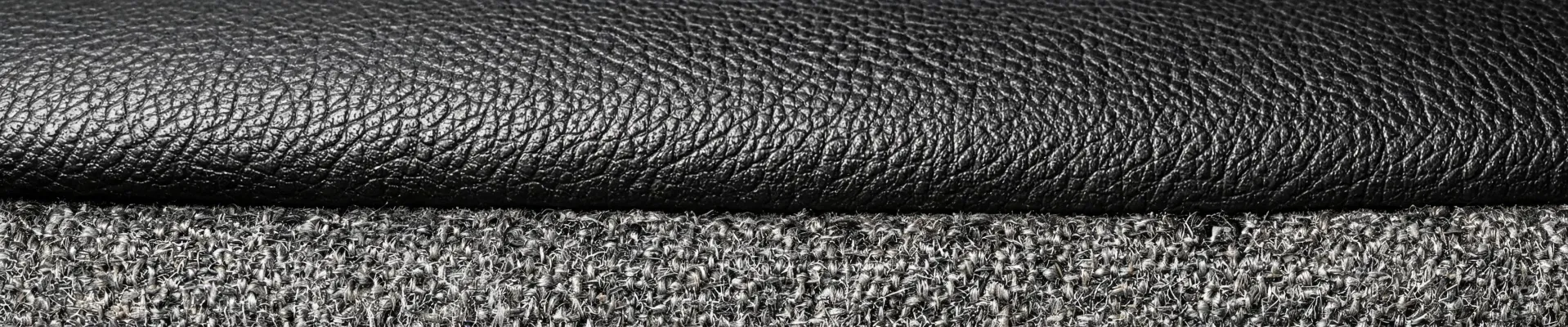
Ultrafabrics is the parent brand, not a single product. Ultraleather and Brisa are product lines within that brand, and they have different constructions, hand feels, and performance profiles. People sometimes assume 'make it Ultrafabrics' is enough information, but it rarely is. If you don't name a line, a distributor may default to whatever they have in stock.
In my experience, Brisa works well for office seating and private label furniture programs, while Ultrafabrics Ultraleather tends to be chosen for hospitality settings that need to stand up to more frequent use. I don't think one is always better than the other. The right choice depends on backing, flexibility, abrasion resistance, and the cleaning methods your customer will use. If a supplier can't explain these differences in practical terms, treat that as a red flag.
2. How do I find a reliable PU leather distributor?
Start by ignoring the unit price—or at least don't make it the first filter. A distributor can offer a lower price and still cost you more after you account for freight delays, low cutting yield, and the risk of a rejected batch. In 2023, I approved a quote that was about 12% below our regular supplier for a similar PU leather. What I didn't realize was that the distributor planned to ship from a warehouse that was several days farther away. The delivery delay alone wiped out the savings.
Now I use three checks before adding a distributor to our list. Can they provide a sample cut from the actual production lot? Do they have documented abrasion, flex, and flammability data? And can they explain the materials they represent without reading from a chart? If the answer is vague, I move on. If you're evaluating a PU leather distributor for the first time, ask for references from companies doing similar work. One short call can reveal more than three sample decks.
3. What does 'solvent-free' really mean for private label orders?
It means there is a claim about the manufacturing process, but a claim is not proof. The FTC Green Guides, available at ftc.gov/green-guides, require environmental claims to be truthful and substantiated. If you plan to market a solvent free leather private label product, you need more than a supplier's one-line assurance.
I once accepted a supplier's self-certified statement that a synthetic leather was solvent-free. Later, our customer asked to see the lab report. We didn't have one, and explaining that to a customer is uncomfortable. Now I ask for three things: a written solvent usage declaration, independent test results, and a clear explanation of which chemicals were replaced. If they hesitate, assume the claim is weaker than it sounds.
4. Why did my cheaper artificial leather end up costing more?
Because the real cost isn't the price per yard. It's the material cost plus testing, fabrication, shipping, installation, and future warranty claims. A cheaper material can look identical on a swatch and still fail after your product is in the field. That's when the cost explodes.
We bought a lower-cost faux leather for a residential furniture collection because it matched the budget and looked the part. Around eight months in, the surface started peeling at flex points—the areas that bend when someone sits down. We had to replace several sofas and cover the freight. That mistake cost more than if we had bought a proven material from the start. Now I calculate total cost of ownership, not the line item price.
5. Can I trust a sample swatch before a full order?
You can trust a swatch for color and texture, but not for production behavior. Swatches are often cut from a controlled piece, while production rolls can vary in coating thickness, finish, or dye lot. That small difference can affect how the material cuts, sews, or wraps around a frame.
Early in my career, we ordered 300 yards based on a swatch that looked right. When the rolls arrived, we measured the material and found it was about 0.2 mm thinner than the spec. The color was fine, but the thinner coating changed the way the fabric draped over a curved armrest. We lost about a week of production while the shop adjusted the pattern. Now I ask for a cutting from the actual lot before committing to large quantities.
6. What specs should I include in my artificial leather inquiry?
Too many inquiries are just 'need vegan leather for sofas.' That's not enough. A supplier will always fill in the blank with whatever they have and whatever gives them the easiest margin. Be explicit: base fabric type, backing material, total weight or thickness, abrasion standard and target cycles, flex resistance, and flammability requirements for your market.
I also mention the final application. If I am sourcing Ultrafabrics Brisa for a work chair, I say it will be used in dynamic seating. If I need artificial leather for automotive interior trim, I include UV stability and fogging requirements. The more parameters you provide, the better the distributor can match you to a product—and the easier it is to hold them responsible if the material doesn't perform.
7. Why is private label lead time often longer than expected?
Because private label work is not simply taking a stock product and adding your name. It usually includes color matching, custom backcoating, quality approvals, and packaging that happen after the base material is made. The lead time salespeople quote may only cover production, not the weeks of specification approvals before it starts.
I learned this with a private label order that was supposed to take three weeks. It stretched to six because the first color match came back wrong and the factory needed another run. My bigger mistake was approving a color based on a digital photo instead of waiting for a physical proof. Under time pressure, I made a call I shouldn't have. The physical sample had a yellow cast, and we paid $1,100 in reprints and air freight. Speed is expensive, but so is guessing.
8. What should I know about bio-based options like Volar Bio?
Bio-based is not the same as solvent-free. Bio-based refers to renewable content in the raw materials, while solvent-free refers to the absence of certain solvents in production. They are separate attributes, and products may have one without the other. That distinction matters if your customer is asking for a sustainable material.
When we first discussed a Volar Bio option, I almost described it as both bio-based and solvent-free in the same sentence. A rep stopped us before the claim went into our marketing materials. Since then, I ask each distributor to confirm which environmental attributes apply to each product. If you're building a private label story around sustainability, separate fact from assumption early in the process.
Lucia Bianchi is a woven apparel-fabric analyst covering cotton, linen, wool, rayon, denim, shirting, twill, satin, poplin, and blended garment fabrics. She applies the ISO 1833 series for fibre composition and ISO 105-C06 for laundering colourfastness while checking GSM, yarn count, usable width, shrinkage, skew, shade grade, drape, and surface defects. Her specification guides help designers, sourcing teams, and mills align fibre claims, lab dips, bulk tolerances, care conditions, and garment performance before production approval.