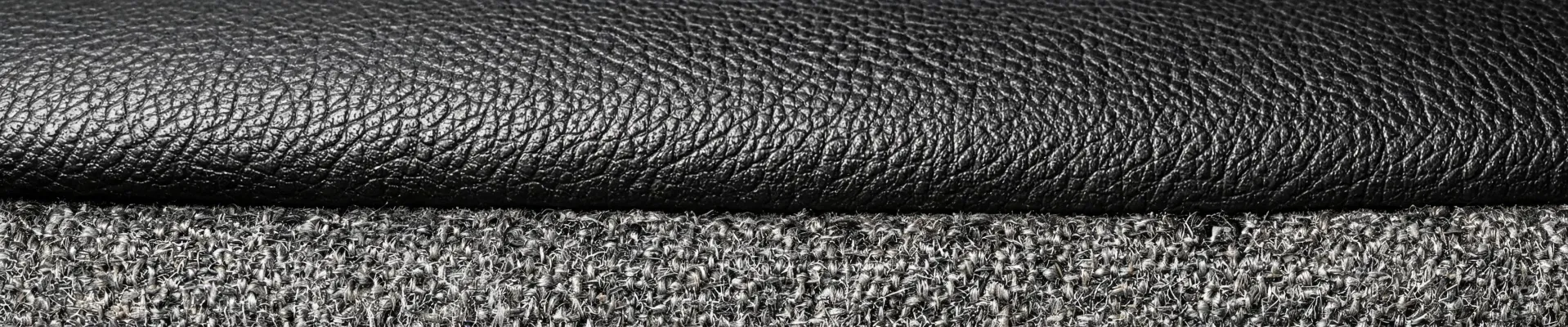
I remember the order that changed how I buy materials: 3,200 yards of synthetic leather that felt beautiful in my hand and failed on real chairs less than a year later. I want to say it was 3,200 yards—don't quote me on the exact number, but the invoice amount stays with me: $18,600. And it wasn't the only mistake I made.
By the time I left that sourcing job, I had personally signed off on seven significant material selections that ended in write-offs, rework, or replacement programs. Total cost: roughly $62,000. I now work with OEM and wholesale programs at Ultrafabrics, so I spend a fair amount of time helping buyers avoid the same path. The irony is that most of them are doing exactly what I did: comparing swatches, checking prices, and trusting their hands.
Where most wholesale buyers start to go wrong
When someone asks me how to choose artificial leather for wholesale, they usually expect a conversation about abrasion cycles, price per yard, and coating thickness. Those things matter. But the buying process almost never starts where it should.
Most buyers start by collecting samples. They lay them out on a table, fold them, stretch them, compare the grain under different lighting, and pick the one that feels most like the product they want to sell. That makes sense if you're choosing fabric for a single sofa. It's a risky way to buy hundreds or thousands of yards.
Here's why: a swatch is a single data point from a single roll. A wholesale order is a bet on a production process. The material has to perform consistently across many rolls, many cuts, many sewing stations, and—if you're making furniture or vehicle interiors—years of actual use. A pretty swatch tells you almost nothing about whether that bet will pay off.
"Artificial leather" is not one material category
The first layer of the problem is that the phrase "artificial leather" hides a wide range of constructions. This is a misconception that comes from an older era, when coated fabrics were relatively simple and the category was easier to compare by eye.
Today, there is a meaningful gap between a polyurethane coating applied over a basic knitted fabric and a true microfiber-based material, where ultra-fine fibers form a dense substrate that is impregnated with polyurethane. Both can be called artificial leather. Both can look similar in a photo. Their durability, flexibility, and resistance to peeling are nowhere near each other.
When I bought materials for a seating manufacturer, I didn't fully appreciate this. I focused on the top coating because that's what I could see and touch. The base construction—the part that determines whether a material will hold up under repeated flexing—was an afterthought.
Now I always cut a sample open. I peel at the edge. I check what's underneath the coating and how firmly it's attached. If a supplier can't tell you whether the product is built on a woven fabric, a knit, or a microfiber nonwoven, that's a red flag—especially for microfiber leather wholesale purchases where the construction is the main performance driver.
The bigger issue: you're choosing for an application, not a category
The second—and in my opinion more costly—mistake is choosing the material before defining the performance standard.
Different end uses require different tests. An office chair in the U.S. might be specified at 30,000 double rubs on a Wyzenbeek tester (ASTM D4157) for contract use. A European commercial upholstery spec might reference Martindale abrasion (ISO 12947) instead. A vehicle interior has completely different requirements: FMVSS 302 for burn resistance, cold-flex performance, and often stricter limits on VOCs and fogging.
I once watched a colleague buy what looked like an ideal automotive leather wholesale product. The price was 14% below the incumbent supplier, the backing was solid, and the sample survived his informal abrasion test. What he hadn't checked was whether the material could pass the cold-flex test at -20°C. It couldn't. The first round of prototype seat covers failed, and the entire 2,400-yard order became slow-moving stock.
That's the lesson that took me years to internalize: the standard comes first, then the material. Not the other way around.
The version I wish someone had given me: decide which tests the material must pass before you decide which sample you like.
For example, if you're exporting finished furniture to the EU, you also need to think about chemical compliance like REACH restricted substances—not just abrasion and colorfastness. A material can be perfectly durable and still fail the compliance documentation required for the market. I've seen buyers discover this after production, when changing material is expensive and embarrassing.
What sample-based buying actually costs
The most expensive mistake I made involved an office seating line where the material looked premium but had a relatively thin wear layer. On paper, the price was great. In the field, the armrests started showing wear at around nine months—well before the warranty period ended.
We covered the replacement cost for the affected chairs, paid for reupholstery labor, and absorbed the administrative chaos of tracking which serial numbers had which batch of material. The original savings compared to the better material was maybe $2 per yard. The failure cost more like $20 per yard once labor, freight, and credibility were factored in.
Wholesale magnifies this. When you buy 5,000 yards instead of 50, the savings from a cheaper price look impressive. But the risk is also magnified—one specification error means thousands of yards of unusable material, not a few rolls you can quietly write off. If you're sourcing microfiber leather wholesale or automotive leather wholesale specifically, the tolerance for inconsistency is even lower because the end product has to meet a documented standard.
How to choose artificial leather for wholesale: the short version
There is no shortcut around the unglamorous part: define the specification before you touch samples. Here's the process I now use, and the one I suggest to wholesale partners who ask for guidance.
- Write down the performance requirements first. Ask the end customer or your own quality team which standards apply. Get the test methods and minimum values in writing. If nobody knows, start with the standards common to your market: abrasion, tear strength, adhesion, cold flexibility, flammability, and applicable chemical compliance.
- Request technical data sheets for the specific product, not the product family. A supplier should be able to provide physical test values, construction details, and compliance documentation. If they can only send marketing brochures, slow down.
- Cut open the sample and examine the base. Check whether you're looking at a coated textile or a microfiber substrate. Pull at the edge. Flex it repeatedly in the same spot. See what fails first.
- Ask how production quality is controlled. A good wholesale supplier tests during production, not just once at the beginning. Ask what tolerances are allowed for coating thickness, backing weight, and color.
- Then, and only then, compare samples and price. Keep a production sample for reference and make sure the delivered rolls match it.
At Ultrafabrics, this is why our conversations with OEM customers rarely start with "send me a sample." They start with the application and the specification the product needs to meet. That might lead us to a line like Brisa or Ultraleather or Volar Bio—depending on the performance profile required, not on which one has the nicest hand. I'd argue the same approach matters no matter which artificial leather brand you're evaluating.
To be fair, this level of diligence isn't necessary for every project. If you're making products with a short life span and no real warranty exposure, a budget-friendly coated fabric might be the right call. I'm not against that. But if you're buying in wholesale volumes and the material has to survive real use, choose the specification first. The swatch is only the beginning.

Lucia Bianchi is a woven apparel-fabric analyst covering cotton, linen, wool, rayon, denim, shirting, twill, satin, poplin, and blended garment fabrics. She applies the ISO 1833 series for fibre composition and ISO 105-C06 for laundering colourfastness while checking GSM, yarn count, usable width, shrinkage, skew, shade grade, drape, and surface defects. Her specification guides help designers, sourcing teams, and mills align fibre claims, lab dips, bulk tolerances, care conditions, and garment performance before production approval.