-
Ultrafabrics Ultraleather vs PVC Leather: The Comparison I Wish I'd Had Earlier
-
Dimension 1: Material Structure and Feel
-
Dimension 2: Cleanability and Maintenance
-
Dimension 3: Sustainability, Solvent-Free, and Compliance
-
Dimension 4: Microfiber Leather OEM vs Private Label
-
Dimension 5: Cost, Lead Time, and Total Ownership
-
Which One Should You Choose?
Ultrafabrics Ultraleather vs PVC Leather: The Comparison I Wish I'd Had Earlier
I'm not a fabric chemist. I'm the person who ends up comparing spec sheets, samples, invoices, and vendor emails for our office and facilities projects. So when I started looking at Ultrafabrics Ultraleather, Ultrafabrics Brisa, and PVC leather for a furniture refresh, I had to build my own comparison framework. This is that framework, cleaned up after a few mistakes.
Here's the short version: Ultrafabrics Ultraleather and Brisa usually sit in the higher-performance synthetic leather category. PVC leather is often the budget-driven option. But the right choice depends on where the fabric goes, how often it gets cleaned, what certifications your project requires, and whether you need microfiber leather OEM or private label supply. I'll compare those dimensions directly.
Dimension 1: Material Structure and Feel
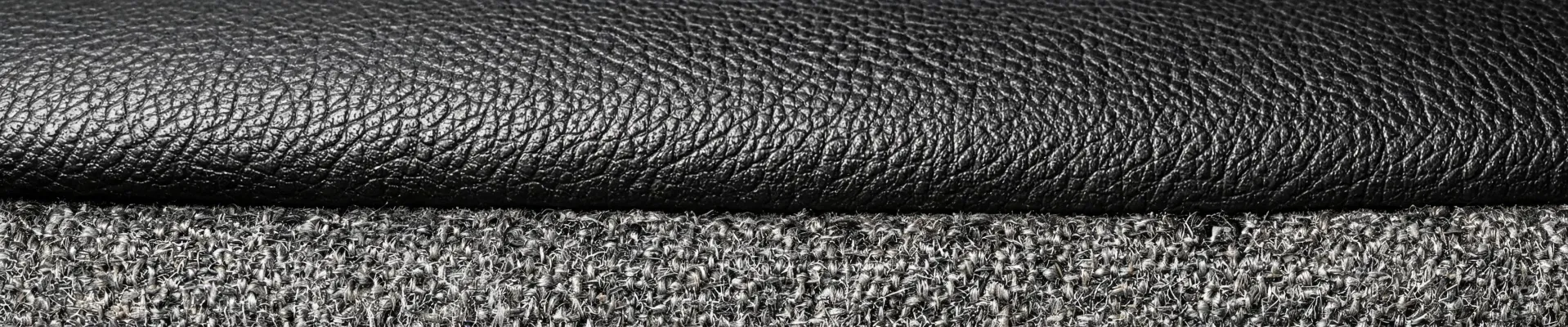
Ultrafabrics Ultraleather and Brisa: These are part of Ultrafabrics' broad portfolio, which also includes Promessa and Volar Bio. Ultraleather is generally positioned as a premium synthetic leather alternative. Brisa has a reputation for breathability and comfort in task seating. The feel is usually softer and more consistent than budget PVC.
PVC leather: PVC leather typically uses a PVC surface layer on a knit or woven backing. It can look good in a sample book. It's also fairly easy to wipe down. But in my experience, the hand-feel can be stiffer, and cheaper formulations sometimes get sticky or crack over time.
Direct comparison: If touch, drape, and long-term appearance matter, Ultrafabrics Ultraleather or Brisa usually wins. If you're covering a low-use information desk or a temporary partition, PVC leather can be enough. Just don't assume 'vegan leather' means the same thing across all three. In my first year coordinating furniture purchases, I made that mistake. PVC, PU, and microfiber leather aren't interchangeable.
Dimension 2: Cleanability and Maintenance
Ultrafabrics: Check the specific cleaning code for the product you're buying. Many Ultrafabrics products are designed for commercial interiors, so mild soap and water cleaning is often part of the care instructions. Brisa, in particular, is often specified for office chairs where people sit for eight hours.
PVC leather: PVC is usually easy to wipe. That's one reason it shows up in clinics, classrooms, and quick-turn furniture. But repeated cleaning with harsh chemicals can dull the finish. And in high-traffic areas, the surface may wear faster than a higher-grade microfiber leather.
Direct comparison: For a break room or reception area that gets cleaned daily, I'd look closely at the manufacturer's abrasion and cleaning test data. PVC can work, but I've seen cheap PVC look tired after 18 months in a busy break room. We reupholstered 14 chairs. It wasn't a catastrophe, but it was roughly an $1,800 lesson I didn't need.
Dimension 3: Sustainability, Solvent-Free, and Compliance
Ultrafabrics Volar Bio: Ultrafabrics lists Volar Bio as a bio-based, solvent-free option. If your RFP includes language around solvent-free leather wholesale, bio-based content, or lower VOC profiles, Volar Bio is worth putting on the sample table. Ultrafabrics also supports OEM, private label, and wholesale programs, so you can ask how those sustainability claims are documented.
PVC leather: PVC leather distributors can supply low-VOC or phthalate-free formulations. But you have to verify it. Not every PVC product is the same. Some PVC leathers are made with plasticizers and solvents that may not fit a strict indoor air quality spec.
Direct comparison: If solvent-free or bio-based content is a hard requirement, Ultrafabrics' Volar Bio line is a more direct starting point. If PVC is allowed and you have a distributor who can provide current test reports, PVC can still meet the spec. The key is documentation, not the category name.
Depending on the application, your spec sheet may reference California TB 117-2013 for upholstered furniture flammability, NFPA 260 for cigarette ignition resistance, or IMO FTP Code for marine interiors. Verify the current version with your testing lab or authority having jurisdiction. I checked public product pages and spec sheets in April 2026, but requirements change.
Dimension 4: Microfiber Leather OEM vs Private Label
This is where a lot of B2B buyers get tripped up. OEM and private label are not the same thing.
OEM / wholesale: You're buying from an existing product line, often with standard colors, backing, and performance specs. Ultrafabrics OEM and wholesale support means you can tap into Ultraleather, Brisa, Promessa, or Volar Bio without building a new product from scratch. Lead times are usually shorter, and minimum order quantities are often lower.
Private label: You're putting your brand on a fabric that may be customized to your specs. That can include color matching, backing changes, or specific performance targets. It gives you more control, but it also comes with higher MOQs, longer development cycles, and testing costs.
Direct comparison: I assumed private label would always be cheaper. It wasn't. For our volumes, an OEM/wholesale program through a distributor was more cost-effective. Private label made sense only when we needed a unique color and could commit to a larger run. If you're a smaller furniture maker or a distributor testing a new line, start with OEM or wholesale. If you have a clear brand story and volume, private label can be worth the upfront work.
Dimension 5: Cost, Lead Time, and Total Ownership
Ultrafabrics: Expect to pay more per yard than budget PVC. But the total cost may be lower if the fabric lasts longer, cleans better, and reduces reupholstery cycles. For a hotel lobby or a corporate office, that math usually favors the higher-performance option.
PVC leather distributor: PVC usually wins on upfront price and availability. If you need 50 yards quickly for a low-traffic project, a PVC leather distributor can be the practical choice. Just ask for current test reports and a sample from the actual production lot, not just a stock swatch.
Solvent-free leather wholesale: If you're sourcing solvent-free leather wholesale, ask about MOQ, lead time, and whether the solvent-free claim applies to the whole construction or just the surface layer. I'm not 100% sure every distributor defines it the same way. Get it in writing.
Direct comparison: PVC leather is usually cheaper upfront. Ultrafabrics is usually more expensive upfront but may last longer and fit stricter specs. The surprise for me was lead time: the cheaper PVC option sometimes had longer lead times because the distributor was waiting on a container. Price and speed don't always move together.
Which One Should You Choose?
Choose Ultrafabrics Ultraleather or Brisa if: You need a premium hand-feel, commercial-grade durability, and a product line that includes solvent-free options like Volar Bio. You're furnishing offices, hotels, healthcare waiting rooms, or transportation interiors where appearance and cleanability matter. You want OEM or wholesale support without building a custom product.
Choose PVC leather if: Your budget is tight, the application is low-traffic, and you can verify current test reports from a reputable PVC leather distributor. PVC can be a perfectly reasonable choice for temporary spaces, back-of-house areas, or price-sensitive projects where the spec isn't demanding.
Choose private label microfiber leather if: You need a unique color, backing, or performance spec, and you can commit to the MOQ and development timeline. If you're just testing a new furniture line, OEM or wholesale is usually the smarter first step.
This worked for our climate-controlled offices and a mid-size furniture refresh. If you're specifying for a bus fleet, a hospital, or a restaurant, the cleaning, abrasion, and flammability requirements are a different conversation. Your mileage may vary. But if you compare these five dimensions—structure, cleanability, sustainability, OEM vs private label, and total cost—you'll ask better questions and avoid the samples that look great but fail in the real world.
As of April 2026, Ultrafabrics' public product line includes Ultraleather, Brisa, Promessa, and Volar Bio. Verify current specs, certifications, and availability directly with Ultrafabrics or an authorized distributor before you place an order.

Lucia Bianchi is a woven apparel-fabric analyst covering cotton, linen, wool, rayon, denim, shirting, twill, satin, poplin, and blended garment fabrics. She applies the ISO 1833 series for fibre composition and ISO 105-C06 for laundering colourfastness while checking GSM, yarn count, usable width, shrinkage, skew, shade grade, drape, and surface defects. Her specification guides help designers, sourcing teams, and mills align fibre claims, lab dips, bulk tolerances, care conditions, and garment performance before production approval.