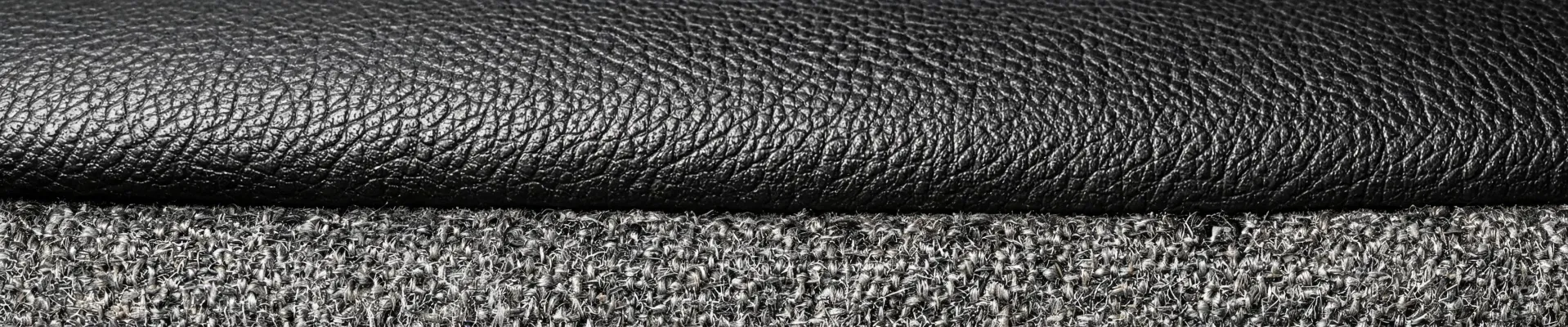
At 4:15 on a Thursday afternoon, I got a call that used to make my stomach drop. A furniture maker needed 2,000 yards of vegan leather for a sofa line by Monday. Normal lead time: 10 days. They were asking me to break our own rules.
I've been in this seat for eight years, coordinating materials for custom furniture and contract seating. I've handled 300+ rush orders in that time, including same-day turnarounds for hotel FF&E packages and 48-hour replacement runs for a regional furniture chain. At least, that's been my experience with deadline-driven furniture and contract seating.
So when someone says “I need it faster,” I don't start with the delivery date. I start with the spec sheet. Because if the spec is wrong, speed is just a faster way to make the same mistake. What follows is the faux leather specification guide I wish I'd had before my first rush order.
The deadline isn't the real problem
In March 2023, a client needed a custom color for a hospitality seating project. They found a supplier who promised 72-hour turnaround. The material looked perfect in the roll. It failed abrasion testing after 12,000 cycles. Our spec required 60,000. We had to replace the rolls, and the replacement cost was $4,200 on top of the original order—plus a canceled room installation.
That's the day I learned that “fast” is not a material property. It's a shipping option. What actually matters is whether the material has been tested for the way it will be used.
The pattern shows up over and over. A purchasing manager calls me in a panic because a sofa line is stuck. We trace the delay back, and it's almost always the same: someone ordered a product name, not a performance standard.
People think expensive vendors deliver better quality. That's backwards. Vendors who can prove their quality charge more because testing and documentation cost money. If you skip the proof to save a few cents per yard, you're not saving money. You're buying an unknown outcome.
The layer below the surface
The deeper problem is that faux leather isn't one material. It's a family of constructions. A polyurethane coating on a light knitted backing is not the same as a bio-based, solvent-free coating on a dense microfiber foundation. They feel similar in a sample book. They perform differently in a real sofa.
I once said to a supplier, “We need a durable synthetic leather.” They heard an instruction for a nice-looking material with soft hand feel. We were using the same word—”durable”—but meaning different things. We discovered this when the first batch arrived and the seam areas started to split during sample assembly. It wasn't malice. It wasn't incompetence. It was an incomplete spec.
Here's the minimum I ask for now:
- Base fabric: type, weight, density.
- Coating chemistry: PU, PVC, bio-based, solvent-free.
- Finish type: matte, textured, embossed, protective topcoat.
- Test methods: abrasion, tear, tensile, hydrostatic, flammability.
If any of those four is missing from your faux leather specification guide, you're not specifying a material. You're specifying a color and a hope.
What “bulk solvent free leather” actually means
If you're sourcing bulk solvent free leather for a sofa factory, you've probably seen “bulk” and “solvent-free” used as if they were one idea. They're not.
“Bulk” refers to volume. “Solvent-free” refers to the coating formulation—no organic solvents used as carriers. You can buy bulk faux leather that contains solvents. You can also buy a solvent-free material that's not built for upholstery. The two labels answer different questions.
When I see “bulk solvent free leather” on a quote, I still ask for the same data I'd ask for from any other material: abrasion cycles, tear strength, hydrostatic resistance, and flammability documentation. Sustainability claims don't change physics. If a material can't survive the application, it doesn't matter how clean the chemistry is.
Ultrafabrics Volar Bio is one example of a bio-based, solvent-free product family. I don't specify it just because of the label. I specify it because the technical data sheet is available. Same with Ultrafabrics Ultraleather and Ultrafabrics Brisa—they're different families with different constructions and different performance profiles. Full product name matters: “Ultraleather” alone doesn't tell you which pattern, backer, or finish you need.
What a vague spec actually costs
Let me put this in the numbers I use when I'm triaging a rush order.
- A base fabric that's $0.40 per yard cheaper failed seam slippage. 140 yards rejected at $14.30 per yard. Net loss: $2,002—not including the overtime.
- Missing flammability documentation delayed a container at the port. The client's contract had a $50,000 penalty clause for late delivery. They found an alternate material, paid $800 in extra freight, and saved the $12,000 order. The stress didn't show up on the balance sheet.
- “Standard color” meant something different to the factory and the designer. The entire lot came out the wrong shade. The material couldn't be re-dyed. It had to be scrapped.
These aren't one-off vendor mistakes. They're structural failures in the specification process. A good sofa leather manufacturer should be willing to walk you through their test data. If they can't, that's a red flag, not a negotiated discount.
Pricing for bulk solvent free leather varies widely. As of April 2026, I've seen production quotes from $6 to $18 per linear yard for upholstery-grade material, depending on construction, finish, and volume (based on supplier quotes we've collected; verify current pricing). The cheapest yard is not the one with the lowest invoice. It's the one that passes your spec the first time.
The fix: a checklist that beats panic
I created a 12-point spec checklist after a $3,000 order came back completely wrong. That mistake changed how I think about prevention. Since then, it has saved us an estimated $8,000 in potential rework, and it's not complicated.
- Application: residential, contract, hospitality, or transport?
- Abrasion requirement: which test method, how many cycles?
- Physical properties: tear, tensile, seam slippage.
- Chemistry: coating type, solvent-free, bio-based content.
- Flammability: CAL TB 117-2013 for U.S. residential, FMVSS 302 for vehicle seating, NFPA 260, or the destination-market requirement.
- Cleaning and stain resistance: what will be used on it?
- Base construction: fabric type, weight, total thickness.
- Color tolerance: acceptable lot difference.
- Surface finish: embossing, texture, topcoat.
- Certifications: REACH, OEKO-TEX, or other import requirements.
- Lead time: what's committed in writing?
- Roll size and yield: does it match your cutting layout?
I should add that this isn't about making suppliers jump through hoops. It's about removing ambiguity before it becomes expensive.
Before we implemented this, our rush-order on-time rate was around 78%, but we were paying for it in rework. Last quarter, with 47 rush orders, we hit 95% on-time delivery and zero spec-related returns. The difference wasn't speed. It was verification.
Five minutes of verification beats five days of correction. I've seen that lesson cost people $12,000 to learn.
According to BIFMA (bifma.org), ANSI/BIFMA X5.4 is a recommended structural durability standard for seating. It won't tell you if the fabric abrades well, but it's the same discipline: use a standard, not a vibe. So if you're sourcing Ultrafabrics, building a sofa line, or buying bulk solvent free leather for the first time, start with the spec. Read the data sheet. Ask the manufacturer to explain their test numbers. Then worry about the deadline. The timeline will follow the specification.

Lucia Bianchi is a woven apparel-fabric analyst covering cotton, linen, wool, rayon, denim, shirting, twill, satin, poplin, and blended garment fabrics. She applies the ISO 1833 series for fibre composition and ISO 105-C06 for laundering colourfastness while checking GSM, yarn count, usable width, shrinkage, skew, shade grade, drape, and surface defects. Her specification guides help designers, sourcing teams, and mills align fibre claims, lab dips, bulk tolerances, care conditions, and garment performance before production approval.