-
Wholesale faux leather questions I actually get asked
-
What should I check first when choosing faux leather for wholesale?
-
How do Ultrafabrics Ultraleather and Ultrafabrics Brisa differ for sofa programs?
-
What specs actually matter in bulk sofa leather orders?
-
How do I verify color consistency before production?
-
Are 'vegan leather' and 'faux leather' the same in a B2B contract?
-
What sustainability claims can I safely put on a spec sheet?
-
How do I avoid hidden costs in bulk sofa leather sourcing?
-
What's changed in faux leather sourcing since 2020?
-
What should I check first when choosing faux leather for wholesale?
Wholesale faux leather questions I actually get asked
I'm a quality and brand compliance manager at a furniture manufacturer. I review every upholstery fabric spec before it reaches production—roughly 45 sofa and seating programs a year. In 2024, I rejected 18% of first fabric submissions for color drift, backing separation, or inconsistent grain. So when sourcing teams ask me how to choose faux leather for wholesale, I don't start with marketing claims. I start with what happens on the cutting table. Below are the questions that come up most often, including the ones buyers don't ask until after a problem shows up.
- What should I check first when choosing faux leather for wholesale?
- How do Ultrafabrics Ultraleather and Ultrafabrics Brisa differ for sofa programs?
- What specs actually matter in bulk sofa leather orders?
- How do I verify color consistency before production?
- Are 'vegan leather' and 'faux leather' the same in a B2B contract?
- What sustainability claims can I safely put on a spec sheet?
- How do I avoid hidden costs in bulk sofa leather sourcing?
- What's changed in faux leather sourcing since 2020?
What should I check first when choosing faux leather for wholesale?
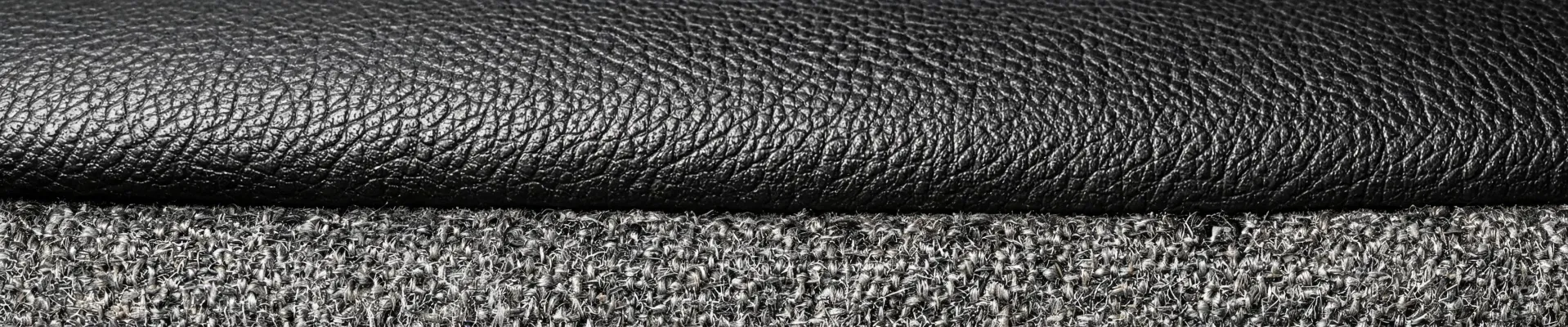
Start with the spec sheet and a physical sample, not the price per yard. For sofa leather wholesale, I check four things: backing adhesion (i.e., how well the layers stay together), color tolerance, abrasion test method, and cleanability. Backing adhesion is the one people skip. I only started requiring it after ignoring it once. We had 300 sofa covers with edge curl after two weeks in a humid showroom. That rework cost us about $2,400. Now every bulk sofa leather PO includes a backing-adhesion requirement and a retained sample. If a supplier can't send current test reports and a production-representative sample, that's a red flag. Ultrafabrics, for example, publishes technical data for Ultraleather and Brisa, but you still need to verify the exact construction against your application.
How do Ultrafabrics Ultraleather and Ultrafabrics Brisa differ for sofa programs?
They're both premium polyurethane fabrics, but they don't behave the same in a sofa program. Ultrafabrics Ultraleather is often chosen for high-touch contract and residential seating where a consistent, leather-like surface and cleanability matter. Ultrafabrics Brisa has a more matte, dry-touch feel and is often specified for family sofas and hospitality because it doesn't have the same slick hand as some traditional faux leathers. The difference isn't better or worse. It's fit. For bulk sofa leather, I ask for a sewn sample on the actual foam and frame. A flat swatch can look great and still pucker on a tight inside arm. If you're comparing Ultrafabrics Ultraleather vs Brisa, put both through a cut-and-sew trial before you commit a container.
What specs actually matter in bulk sofa leather orders?
Not every number on a data sheet matters equally. For upholstery, I prioritize abrasion cycles with the test method named, colorfastness to light and rubbing, tear and tensile strength, and flexibility at low temperature if the product ships in cold climates. I also want to know the backing type and weight, because that affects hand, stretch, and how the fabric behaves on automated cutting tables. The FTC doesn't regulate fabric durability, but general advertising rules do require claims to be truthful and substantiated. So if a supplier says 'contract grade' or 'heavy duty,' ask for the test report behind it. Vague claims in a wholesale quote usually mean vague accountability later.
How do I verify color consistency before production?
Color drift is the most common reason I reject a first bulk delivery. For brand-critical colors, I ask for Delta E < 2 against the approved standard. Delta E is the color difference metric used in color management; Delta E 2–4 is noticeable to a trained observer, and above 4 is visible to most people. Pantone's color matching guidance is a useful reference here, but the real control is lighting. I review samples under D65 and interior warm light, because a sofa can look right in a showroom and wrong in a customer's living room. If you're buying bulk sofa leather, keep a retained sample from the approved lot and write the tolerances into the PO. 'Close enough' isn't a spec.
Are 'vegan leather' and 'faux leather' the same in a B2B contract?
In everyday language, yes. In a contract, no. Vegan leather usually means no animal-derived ingredients. Faux leather is a broader term for synthetic leather alternatives, including PU, PVC, and microfiber. If you're sourcing for a brand that markets to vegan customers, you need documentation for the whole construction: face, backing, adhesives, and finishes. Some products use bio-based content, but that doesn't automatically make the whole fabric biodegradable or compostable. Per FTC Green Guides (16 CFR Part 260), environmental claims need substantiation and clear qualifications. If only the backcloth is recycled, say that. Don't let a vague 'eco-friendly' line in a quote become a compliance problem on your website.
What sustainability claims can I safely put on a spec sheet?
Keep claims specific, verifiable, and limited to what the supplier can document. I've seen buyers get excited about 'solvent-free' or 'bio-based' and then realize they can't prove the percentage. Ask three questions: What exactly is bio-based? What is the verified percentage? Which third-party standard or test supports it? Ultrafabrics offers Volar Bio as a bio-based option, but the safe approach is to use the current technical data sheet and the supplier's official language, not a paraphrase from a sales email. Also remember that 'vegan' is not the same as 'sustainable.' A fabric can be animal-free and still have a high environmental footprint. For wholesale faux leather, the strongest claim is the one you can defend with a document.
How do I avoid hidden costs in bulk sofa leather sourcing?
The 'cheap' option isn't always cheap (surprise, surprise). Hidden costs show up as width loss, shade variation, poor roll put-up, or excessive defects. I calculate usable yield, not just price per yard. If a roll has a 2-inch edge defect on both sides, your cutting team may lose 5–10% of the width. On a 5,000-unit sofa program, that's real money. I also ask about minimum order quantities, surcharges for small dye lots, and whether the supplier will hold a retained sample for future bulk runs. Ultrafabrics and other established mills usually have clearer spec sheets, but no brand name replaces a purchase order with tolerances, inspection criteria, and a sample retention clause.
What's changed in faux leather sourcing since 2020?
In 2020, many buyers treated faux leather as a price-only category. In 2025, the same buyers are asking for traceability, bio-based content, solvent-free manufacturing, and test reports before they'll approve a sample. The fundamentals haven't changed—consistent color, backing integrity, abrasion performance, and cleanability still decide whether a sofa program succeeds. But the execution has transformed. What was best practice in 2020 may not apply in 2025. Ten years ago, a pretty swatch and a low quote might have been enough. Now I want the data sheet, the test method, the retained sample, and a supplier who answers questions in writing. That's not bureaucracy. That's how you protect a brand.
Mireille Fontaine is a textile quality, compliance, and sourcing analyst covering apparel fabrics, interior textiles, performance materials, coated fabrics, nonwovens, fibres, recycled-content claims, chemical restrictions, and mill production terms. She uses ISO 14040 and ISO 14044 life-cycle boundaries alongside lot-based inspection data while comparing declared composition, restricted-substance evidence, chain of custody, colour difference, defect rate, MOQ, sampling lead time, yield loss, and replacement risk. Her procurement guides help brands, importers, and manufacturers compare supplier claims, test-report scope, bulk tolerances, traceability, environmental disclosures, and total delivered value.